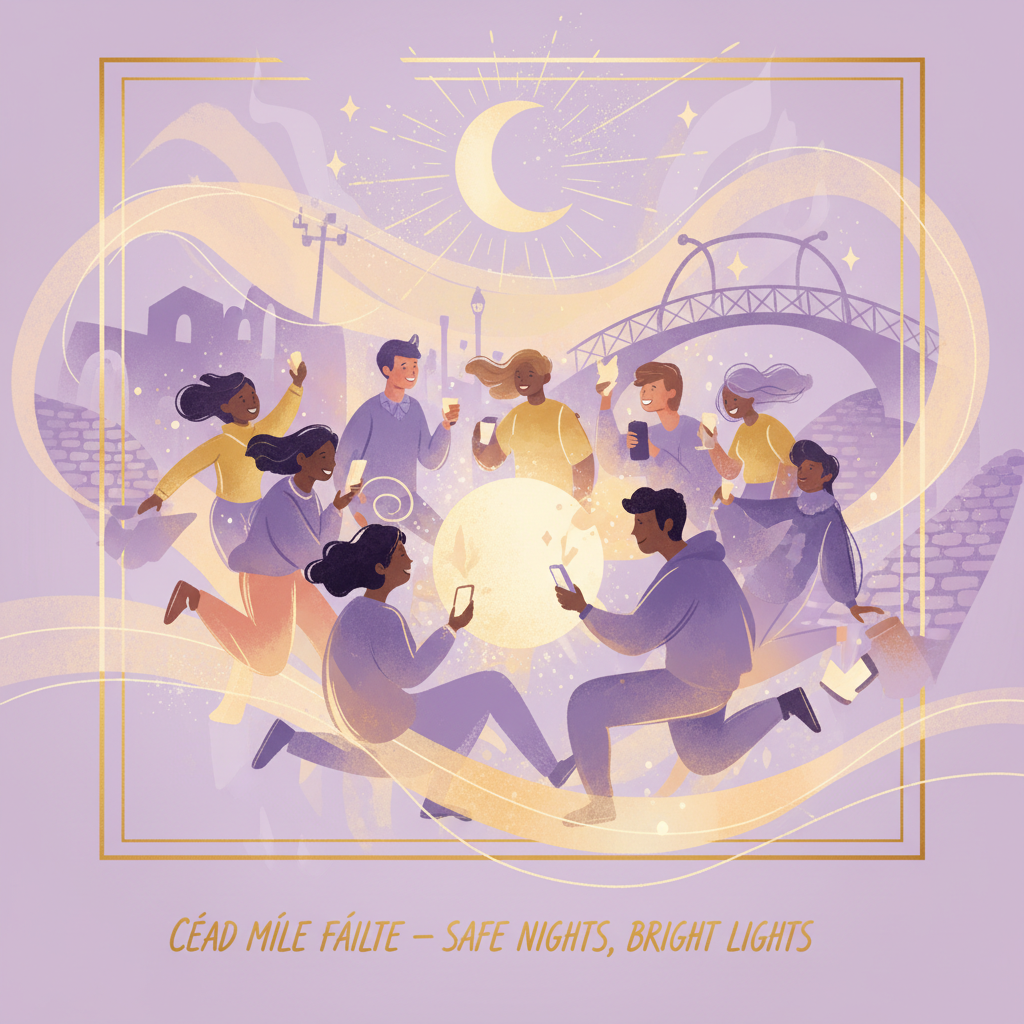
Student Night Safety in Ireland: Freshers, House Parties, and Safe Check-Ins
College in Ireland should be memorable for the right reasons: new friends, great nights, and stories you actually want to tell. Whether you're in Dublin, Cork, Galway, Limerick, Belfast, or a smaller college town, nights out are a huge part of student life. But with packed venues, unfamiliar streets, social pressure, and too many "sure it'll be grand" moments, things can go wrong fast if you're not prepared.
This guide is built for real student life-not fearmongering, and not generic advice that ignores what nights out are actually like. If you're looking for a practical framework for student safety ireland night out situations, this is for you. You'll get a step-by-step system you can use before, during, and after any night: freshers' events, pub crawls, society nights, house parties, and late-night trips home.
Why student nights out carry extra risk (and why that's manageable)
Most safety issues are predictable. The same patterns show up every term:
- People get separated from their group after venue changes.
- Phones die, data runs out, or location sharing is off.
- Someone feels unsafe but doesn't want to "make a fuss."
- House parties have no clear host, no quiet room, and no exit plan.
- Late-night transport is confusing, expensive, or unavailable.
- Friends underestimate intoxication because "everyone seems fine."
The good news: a simple safety framework prevents most of this. Think of it like a game plan, not a restriction.
The SAFE framework for nights out
Use this four-part system every time:
- S - Set the plan: route, transport, check-in times, and your buddy.
- A - Alert your circle: share key details before you head out.
- F - Follow check-ins: quick status updates at agreed points.
- E - Exit smart: leave early if needed, get home with a verified plan.
It takes five minutes to set up, and it removes a lot of late-night panic.
Going on a date or night out?
Schedule a safety check-in call in 30 seconds. €1.99, no app needed.
Book a CallSafe →Before you go out: your 10-minute safety setup
1) Pick your "home team"
Don't rely on random group chats where messages get buried. Choose 2–4 people you trust who are definitely out that night and likely to stay reachable. This is your home team. For more comprehensive preparation advice, check our safety planning checklist.
- Assign one buddy pair (you + one person who checks you're okay).
- Set one backup contact who isn't drinking much or is at home.
- Agree one "not okay" code phrase you can text if you need help discreetly.
2) Lock in your transport both ways
Knowing how you get in is easy. Knowing how you get home is where safety lives.
- Check last bus/Luas/DART times before leaving.
- Save money for emergency transport (don't spend your last €20 too early).
- If using a ride app, verify plate, driver, and route before getting in.
- If using taxis, use official ranks or booked services only.
3) Prepare your phone like it matters (because it does)
- Charge to 100% and bring a charged power bank.
- Enable location sharing with your home team.
- Turn on emergency SOS and medical info on lock screen.
- Save emergency contacts as favourites for one-tap calling.
4) Set your check-in schedule
Make it specific, not vague:
- Check-in 1: "Arrived at first venue."
- Check-in 2: "Leaving venue / moving location."
- Check-in 3: "In transport home."
- Check-in 4: "Inside home safely."
These can be one-tap messages. The habit matters more than the format.
Freshers' week: high fun, high risk, low routine
Freshers is brilliant-but it's when students are newest to the city, social circles, and venues. That combination increases vulnerability, especially for first years and international students.
Freshers safety rules that actually work
- Never start the night alone. Meet first in accommodation or campus, then go together.
- Photograph key details early: your group, venue name, and nearest landmark.
- Keep one alcohol-free person in the core group if possible.
- Don't leave with people you just met unless your buddy knows who/where/when.
- If plans change, update the group immediately. "Going to X with Y, back by 1:30."
Freshers is where routines are built. Build safe ones from day one.
House parties in Ireland: fun but less controlled
House parties can feel safer than clubs because they're "private." In reality, they often have fewer safeguards: no trained staff, no security, no clear accountability, and no proper way home at 3am.
How to assess a house party in 90 seconds
- Who is hosting? If no one clearly owns the space, be cautious.
- Who is there? If it's mostly strangers and the crowd keeps changing, risk increases.
- What's your exit? If you can't describe how you'll leave safely, don't stay late.
At the party: practical boundaries
- Keep your drink with you; don't accept opened drinks from strangers. Learn more about preventing drink spiking.
- Know where doors and quiet spaces are.
- Leave in pairs or groups-never let someone walk home alone.
- If someone looks unwell, act early: check responsiveness, breathing, and call for help if needed.
Being "sound" means stepping in, not staying silent.
On the night: your live safety checklist
1) Stay connected, not glued to your group
You don't have to stay shoulder-to-shoulder all night. But no one should disappear without a trace. If someone goes to another venue, gets food, or leaves early, they send a check-in.
2) Use the 20-minute rule for missing friends
If someone misses a check-in and can't be reached for 20 minutes:
- Call them, then message.
- Contact the buddy assigned to them.
- Check known locations (toilets, smoking area, queue, outside).
- Escalate to venue staff or security quickly if needed.
Early action prevents worst-case scenarios.
3) Trust discomfort without debating it
If a person, place, or situation feels off, that is enough reason to leave. You do not need "proof" to protect yourself.
- Use your code phrase to alert friends.
- Go to staff, bar, or door security if in a licensed venue.
- Move to a bright, busy area and call your buddy.
4) Watch for vulnerability points
Most incidents happen during transitions: outside venues, queues, walking between places, waiting for transport, and arriving home. Treat transitions as high-alert moments.
Alcohol, substances, and harm reduction (no judgement, just reality)
Students don't need lectures-they need practical risk reduction.
- Eat before drinking and hydrate through the night.
- Alternate alcoholic and non-alcoholic drinks.
- Avoid mixing unknown substances or combining with heavy drinking.
- If a friend is unusually confused, drowsy, or unresponsive, treat it as urgent.
If in doubt, call emergency services. It is always better to overreact than underreact when someone's consciousness or breathing is affected.
Getting home safely: the most important phase
The night is not over when you leave the venue. Home arrival is the final safety checkpoint. For more comprehensive advice on getting home safe after a night out, see our detailed guide.
Homebound protocol
- Send "leaving now" message with transport method.
- If in a car/taxi, share route live with your buddy.
- Don't get dropped in dark isolated spots "near enough" to home.
- Send "inside safely" confirmation once your door is locked.
If someone doesn't send final check-in, buddies follow up immediately.
What to do if something goes wrong
No one plans for incidents, but having a script helps when stress is high.
If you feel unsafe right now
- Move to a busy, lit area.
- Call or message your buddy/home team.
- Contact venue staff/security or emergency services.
- Stay on the phone with someone until you're in a safe location.
If your friend is in trouble
- Stay with them. Don't leave them alone.
- Get help from staff/security or call emergency services.
- Share exact location and clear symptoms/details.
- Ensure they get home with a trusted person and complete final check-in.
Build a "safety culture," not just a one-night plan
The strongest protection is social. When your friend group normalises check-ins and looking out for each other, risk drops for everyone.
- Make check-ins standard, not "paranoid."
- Praise people who intervene early.
- Debrief after nights out: what worked, what didn't.
- Keep the tone supportive-no blame for asking for help.
Safety is not about killing the vibe. It's what lets the vibe continue.
Your 30-second plan before your next night out
Before you head out this week, do these four things:
- Pick your buddy.
- Set check-in times.
- Confirm transport home.
- Agree your emergency code phrase.
That's it. Simple, repeatable, effective.
CTA: Make safe check-ins automatic with CallSafe
You shouldn't have to remember every message when you're out enjoying yourself. CallSafe helps students stay connected with smart, scheduled check-ins and rapid alerts if someone goes quiet at the wrong time.
If you care about student safety ireland night out planning, start using CallSafe before your next event. Set your trusted contacts once, create your check-in flow in minutes, and make "text me when you get in" automatic for your whole group.
Try CallSafe now and build a safer night-out routine for your friends.