You've got the outfit picked out. You checked the restaurant reviews. You planned your arrival time so you're not awkwardly early but also not late. You know what you're wearing, what you're ordering, and how you'll get there. You're prepared.
Except there's a whole other checklist — the one nobody posts about on Instagram or talks about in group chats. The one that has nothing to do with looking good and everything to do with staying safe.
This is the first date checklist that actually matters.
The Checklist Everyone Talks About
- ✓ Pick a cute outfit
- ✓ Do your makeup/hair
- ✓ Choose a public place to meet
- ✓ Arrive on time
- ✓ Plan some conversation topics
- ✓ Charge your phone
All good advice. None of it will help if the date goes sideways and you're in a situation you didn't plan for.
The Checklist Nobody Talks About (But Should)
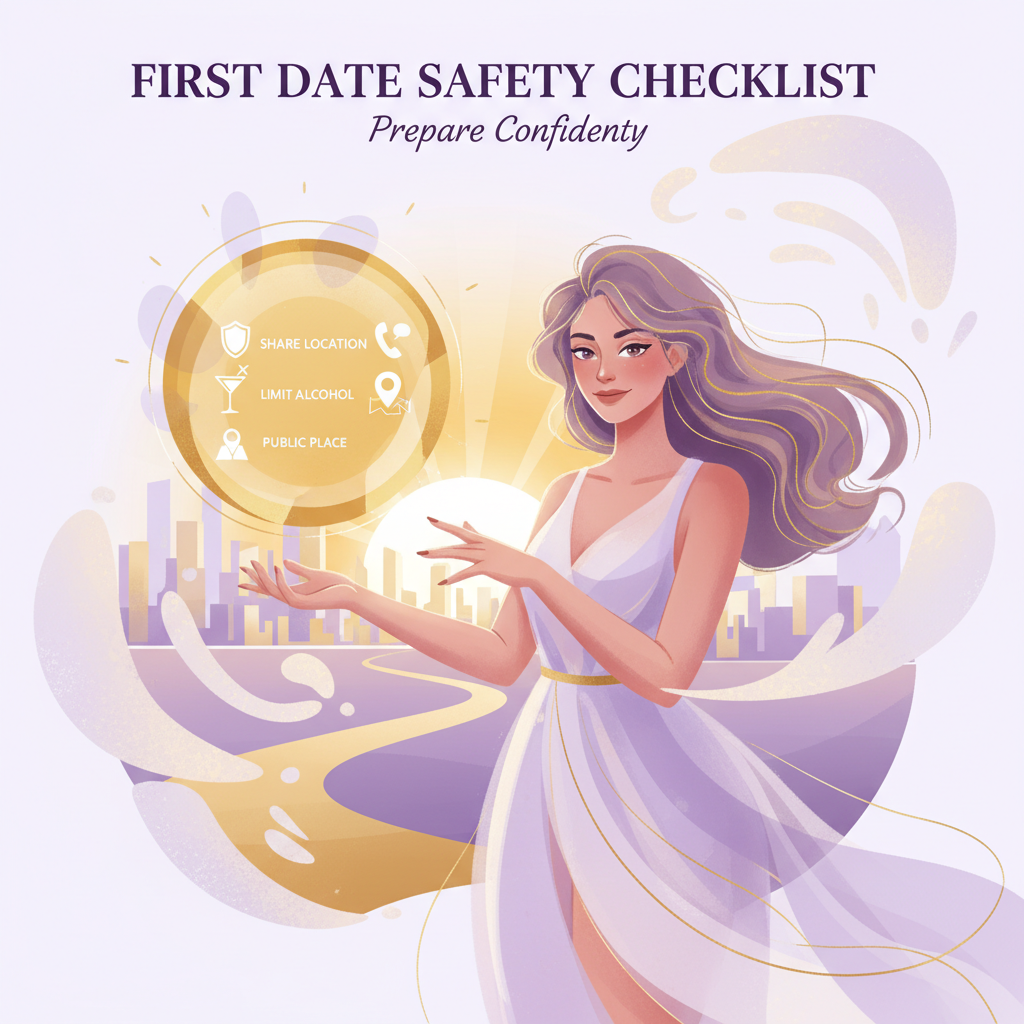
The Real First Date Safety Checklist
- Tell someone exactly where you're going. Not "dinner with a guy from Hinge" — the restaurant name, address, and the time you're meeting.
- Share his profile. Screenshot his dating app profile (name, photo, bio) and send it to a friend. If something happens, they have identifying info.
- Share your live location. Use your phone's built-in location sharing or apps like Find My Friends. Someone should be able to see where you are in real-time.
- Schedule a check-in call. Not "I'll text you later" — an actual call at a specific time that you've scheduled in advance.
- Plan your own transport. Drive yourself, take an Uber, or use public transit. Never rely on him for a ride to or from the date.
- Bring cash. Enough to cover your meal and a taxi home. If things go wrong, you need an exit that doesn't depend on card readers or apps.
- Keep your phone charged and accessible. Not buried in your bag — easily reachable if you need to call for help or leave quickly.
- Set boundaries before you go. Decide in advance: no going to his place, no inviting him to yours, public places only. Stick to it.
Dating safety experts emphasize that preparation isn't paranoia — it's how you ensure you can enjoy the date and come home safely.
Why "Tell Someone Where You're Going" Isn't Enough
"I'll text my friend and let her know" sounds like a safety plan. But what are you actually telling her?
- "Dinner with a guy from Bumble at 7"
- "Date tonight, will text you after"
- "Meeting someone, talk later"
None of those give your friend actionable information. If you don't check in later, where would they even start looking?
Harvard dating safety guidelines recommend sharing:
- The person's full name (from their profile)
- Their photo
- The exact location (restaurant name and address)
- What time you're meeting and when you expect to be done
- How you're getting there and how you're getting home
That way, if something goes wrong, your friend knows where you were supposed to be and who you were supposed to be with.
Going on a date or night out?
Schedule a safety check-in call in 30 seconds. €1.99, no app needed.
Book a CallSafe →Add one more thing to your checklist: a scheduled safety call.
Set up a CallSafe in 30 seconds →The Problem with "I'll Text When I'm Home"
This is the most common safety "plan" — and it has the most failure points.
Scenario 1: You Forget
The date's going well. You're walking to your car, chatting, distracted. You get home, kick off your shoes, and collapse on the couch. You meant to text your friend. You genuinely did. But you forgot.
Now she's sitting there at 11:30pm wondering: Did she forget? Or is something wrong?
Scenario 2: Your Phone Dies
Between navigation, photos, and nervous scrolling before the date, your battery's at 8% by the time you leave the restaurant. It dies on the walk to your car. You can't text. You can't call.
Your friend has no idea if you made it home or if you're stranded somewhere with a dead phone.
Scenario 3: You Can't Text
This is the scenario nobody wants to think about, but it's the one that matters most: What if you're in a situation where you can't reach for your phone?
You're not home. You're not safe. And the person who's supposed to check in on you is waiting for a text that will never come.
A scheduled call solves all of this. It comes to you at the exact time you planned, whether you remember or not, whether your phone's charged or not. And if you don't answer, that's an immediate signal something's wrong.
Why Public Places Aren't Foolproof
"Just meet in a public place" is solid advice. Match.com's safety tips and dating safety experts all recommend it.
But "public" doesn't mean "safe" if:
- He suggests moving to a second location (a quieter bar, his favorite spot, "just around the corner")
- The restaurant is in an unfamiliar area and you don't know how to get home safely
- You've had a few drinks and your judgment is impaired
- He offers to walk you to your car — and now you're in a dark parking lot, alone with him
Public places are a good start. But they're not a complete safety plan.
The One Thing That Gives You Permission to Leave
Here's the hardest part of a bad date: actually leaving.
You don't want to be rude. He's been nice (so far). You don't want to make a scene. You don't want to hurt his feelings. You don't want to seem paranoid.
So you stay. Even when your gut says go. Even when you're uncomfortable. Even when you'd rather be anywhere else.
A scheduled safety call gives you permission to leave without having to justify it.
How a Safety Call Changes the Dynamic:
Before the date: Schedule a check-in call for 90 minutes in (or whenever feels right for you).
If the date's great: You answer, confirm you're fine, and reschedule another check-in if you want to stay longer.
If you want to leave: When the call comes, you say "Sorry, I need to take this" — and you just... leave. No explanation needed.
If you can't answer: That's the red flag. Someone knows you were supposed to be reachable at that time, and you're not.
The Before, During, and After Checklist
Before the Date
- ✓ Research him. Google his name. Check his social media. Look for inconsistencies.
- ✓ Video chat first (if possible). Confirms he looks like his photos and isn't hiding something major.
- ✓ Tell a trusted person all the details. Name, photo, location, time, transport method.
- ✓ Share your live location. Use Find My Friends, Google Maps, or your phone's built-in sharing.
- ✓ Schedule a CallSafe. Pick a time for a check-in call (e.g., 90 minutes into the date).
- ✓ Charge your phone fully. Bring a portable charger if you have one.
- ✓ Plan your transport. Know how you're getting there and how you're getting home — independently.
During the Date
- ✓ Meet in a public, familiar place. Somewhere you've been before or that's well-reviewed and busy.
- ✓ Don't leave your drink unattended. If you go to the bathroom, get a new drink when you return. Learn more about protecting yourself from drink spiking.
- ✓ Limit alcohol. Stay alert enough to trust your judgment and leave if you need to.
- ✓ Trust your gut. If something feels off, it probably is. You don't owe anyone the benefit of the doubt. See our guides on recognizing red flags and what to do when you feel unsafe.
- ✓ Answer your check-in call. Even if the date's going great, confirm you're safe. Reschedule another if you're staying longer.
- ✓ Don't change locations without updating your friend. If you move to a second bar, send the new address.
After the Date
- ✓ Confirm you're home. Text your friend when you arrive safely.
- ✓ Stop sharing your location. Once you're home, turn off live tracking.
- ✓ Debrief with yourself. Did anything feel off? Any red flags? Trust those instincts before a second date.
This Isn't About Living in Fear
Let's be clear: Most first dates are perfectly fine. The person across from you is probably nervous, hoping you like them, and trying to make a good impression. They're not dangerous. They're just... a person.
But you can't know that for certain until you've spent time with them. And by the time you do know, you're already alone with them.
This checklist isn't about assuming the worst. It's about not leaving your safety to chance. It's about having a system in place so you can actually enjoy the date instead of constantly scanning for threats.
When you know you've got a check-in call coming, when you know someone has your location, when you know you can leave at any moment without having to justify it — that's when you can actually relax and be present.
The Prep That Actually Matters
Choosing the right outfit matters. Planning conversation topics matters. But none of that matters if you're not safe.
CallSafe costs €1.99 for a single check-in call at the time you choose. No app. No subscription. Just one call that happens whether you remember or not.
It's less than the cost of your Uber to the date. Less than your drink at the bar. Less than your share of the dinner bill.
And it's the one thing on your checklist that could actually save you if something goes wrong.
🚨 In an emergency: Call 999 or 112 immediately. If you feel unsafe, leave right away. CallSafe is a check-in tool, not emergency response.
References
- JEMS For All — 101 First Date Safety Tips — https://jemsforall.com/blogs/blogs-2025/101-first-date-safety
- Harvard Magazine — Dating Safety Tips — https://www.harvardmagazine.com/classifieds/tips/dating-safety
- Match.com — Dating Safety Tips — https://help.match.com/hc/en-us/articles/6991442293787-Dating-Safety-Tips
- US Drug Test Centers — 7 Dating Safety Tips to Protect Yourself — https://www.usdrugtestcenters.com/drug-test-blog/309/7-dating-safety-tips-to-protect-yourself.html