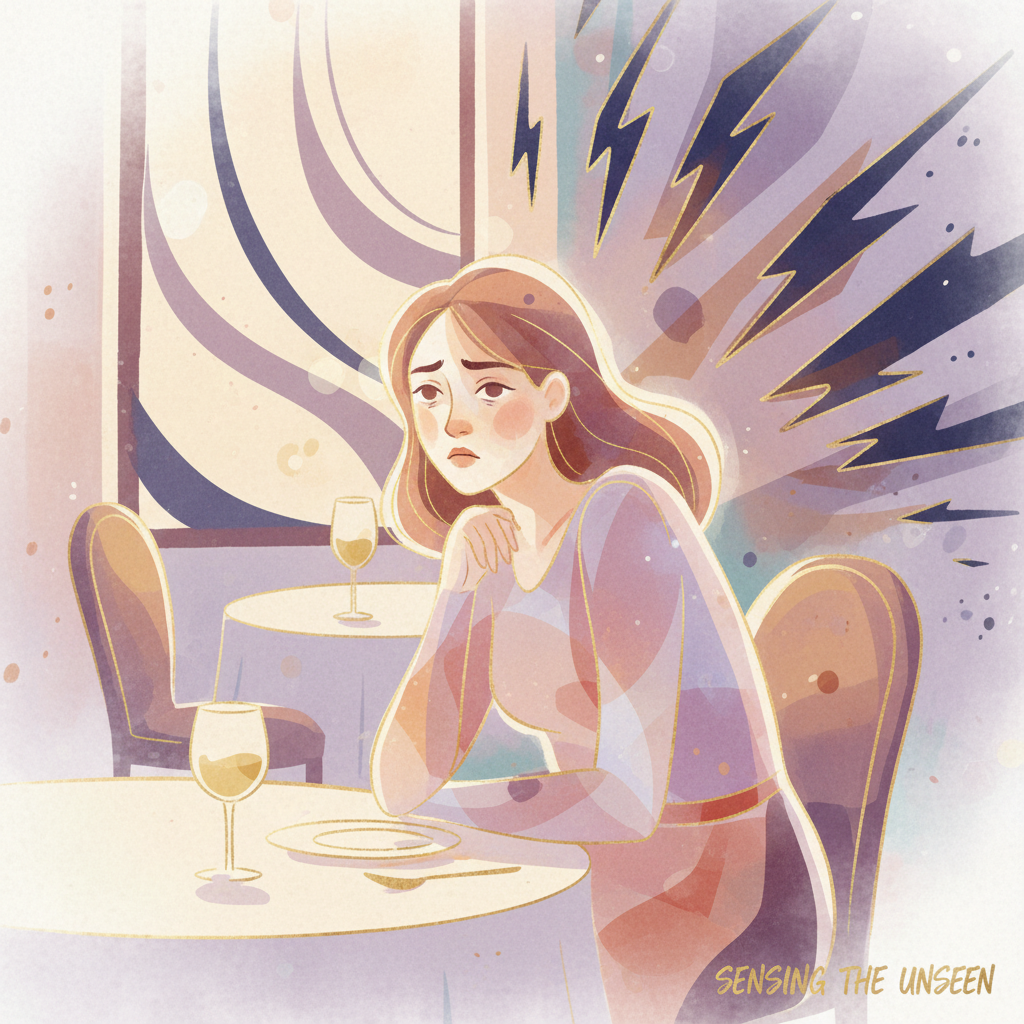
Your Gut Feeling Isn't Being Dramatic
You're sitting across from someone who seemed perfectly nice in the messages. The venue is public. Nothing objectively "wrong" has happened. But something feels off, and now you're second-guessing yourself: Am I overreacting? Am I being rude? What if I'm wrong?
Here's what you need to hear: you don't owe anyone the benefit of the doubt at the expense of your safety.
That prickle of unease—whether it's something they said, the way they're watching you, how they responded when you disagreed, or just an inexplicable wrongness—is your nervous system doing its job. It's pattern-matching against thousands of years of survival instinct and your own lived experience.
You don't need to justify it. You don't need proof. And you absolutely don't need to stay to be polite.
What you need is a plan for what to do if you feel unsafe on a date—because having options turns panic into action.
Immediate Actions: Assess, Don't Escalate
When that unsafe feeling hits, your first job is to assess without escalating. You're gathering information, not making accusations.
Check your surroundings:
- Where are the exits? Note them now, not when you need them.
- Where's the bar staff? Identify who you could approach.
- Who else is nearby? Other diners, groups, staff—witnesses matter.
- Where's your phone? On the table, in your hand, not buried in a bag.
Calibrate the situation:
- Mild discomfort: Something's off, but not threatening (yet). You want to leave, but not urgently.
- Active concern: Behaviour is escalating—anger, aggression, ignoring boundaries, too much drinking.
- Immediate danger: You feel physically threatened, trapped, or they're blocking your exit.
Your response scales with the situation. Let's start with the subtle exits, then work up.
Going on a date or night out?
Schedule a safety check-in call in 30 seconds. €1.99, no app needed.
Book a CallSafe →Exit Strategies: From Soft to Emergency
For Mild Discomfort: The Graceful Exit
When nothing's "wrong enough" to justify drama, but you know you want out:
The classic excuses still work:
- "I'm so sorry, I've just remembered I promised to call my mum tonight—it's important."
- "I'm not feeling well—I think something I ate earlier isn't agreeing with me."
- "I've got an early start tomorrow and I'm absolutely knackered—I need to head off."
The boundary-setter: "I'm going to call it a night. It was nice meeting you." No elaboration, no apology beyond basic politeness. Stand up, collect your things, leave.
The pre-planned exit: This is where a safety call becomes gold. Having your phone ring with a believable reason to leave—a friend in crisis, a work emergency, a family situation—gives you an exit that feels justified without confrontation.
Never Go In Without a Plan B
CallSafe lets you schedule a check-in call before your date. When it rings, you answer naturally—then press 1 if you're fine, or press 2 if you need to go. Press 2, and we'll give you a convincing reason to leave immediately.
For Active Concern: The Firm Exit
When someone's behaviour is escalating—they're getting pushy, aggressive, or ignoring what you're saying—subtlety takes a back seat to clarity.
Be direct: "I'm leaving now. Thanks for meeting me." Don't ask permission ("I think I should go?"), don't apologise excessively, don't debate. State, stand, leave.
Create distance before they can react:
- Stand up as you speak
- Move towards public areas, not isolated corners
- Head to the bar or staff area if you're worried they'll follow
- If they block your path, say loudly: "Please move. I'm leaving." Volume attracts attention.
Don't go to your car alone if you feel followed. Go back inside. Ask staff to watch you leave or call you a taxi. Wait in a public area. Trust that escalation feeling—it's rarely wrong.
For Immediate Danger: The Emergency Exit
If you feel physically threatened, trapped, or in danger:
- Attract attention immediately. Shout if you need to. "I don't know this person." "I need help." "Call the police."
- Go to staff. Bar staff, restaurant managers, security—approach them directly and say, "I don't feel safe. Please help me."
- Call 999 or 112. If you're in immediate danger, call. If you can't speak, dial and leave the line open—operators are trained to detect silent emergency calls.
- Don't leave alone. Ask staff to stay with you until police arrive or a trusted person collects you.
If they've spiked your drink or you feel suddenly unwell: Tell someone immediately. Bar staff, security, other customers. Say the words "I think I've been spiked." Get help now, not when you get home.
The "Angel Shot" and Other Bar Safety Codes
You might have seen social media posts about the "Angel Shot"—a code you can use at the bar to discreetly signal you need help:
- Angel Shot: I need help getting out of this situation
- Angel Shot with lime: Please call me a taxi
- Angel Shot with ice: Call the police
Here's the reality: some bars know this code. Many don't. It's not standardised, and in a busy pub on a Friday night, even well-meaning staff might not recognise it or respond quickly.
Use it if you think it'll work, but don't rely on it as your only plan. If you need help, saying directly to bar staff "I don't feel safe with that person, can you help me leave?" is clearer and faster than hoping they know a code.
That said, bar staff are often brilliant at reading situations. If you approach the bar and quietly say "I need help," most will respond. They've seen it before.
The Check-In Call: Proactive Safety Before It Gets Unsafe
The best time to have an exit strategy is before you need one. That's where the check-in call comes in.
Traditionally, you'd arrange for a friend to call you mid-date. If things are fine, you say so. If not, you act like there's an emergency and leave. It's a solid plan—except when your friend forgets, or their phone dies, or they're three drinks in and asleep on the sofa.
When friends can't save you, automation can.
Here's how a scheduled check-in call works:
- Before your date, you schedule a call for a specific time (say, 45 minutes in)
- Your phone rings at that time with a natural-sounding call
- You answer, and press 1 if everything's fine ("Yeah, I'm good, thanks for checking!")
- Or press 2 if you need to leave ("Oh no, is she okay? I'll come right now.")
The beauty is the believability. You're not faking a call—you're receiving one. You're not making up an excuse—it's coming from the call itself. And your date has no reason to doubt it.
It's not paranoia. It's just having a seatbelt.
After the Date: What to Do Next
You've left. You're home. You're safe. Now what?
If nothing happened but you felt unsafe:
- Trust that feeling. Block them. You don't owe an explanation.
- Tell someone. A friend, a flatmate, anyone. Say it out loud: "That date felt wrong." It helps process it and creates a record.
- Report if appropriate. If they did something reportable on the dating app (harassment, threats, sexual content), report them. It might protect someone else.
If something happened:
- You can report it. To the police (999 for emergencies, 101 for non-emergencies), or to organisations like Women's Aid Ireland (1800 341 900) or Rape Crisis Centre (1800 778 888).
- You don't have to report it. Not reporting doesn't mean it wasn't serious. You get to decide.
- Reach out for support. Friends, family, or professional support services. You don't have to process it alone.
- Document what happened. Write it down while it's fresh—what happened, when, where, what they said. If you report later, you'll have it.
If you think you were spiked:
- Get tested. Many spiking drugs leave your system within 24-72 hours. The sooner you test, the better. A&E or your GP can arrange this.
- Report it to the venue and police. Even if you didn't see it happen, report it. CCTV might have caught something.
- Tell the dating app. If you met through a platform, report the user.
You Didn't Overreact. You Responded.
There's a narrative that women are "too anxious" about dating, that we see danger where there's none. But we also know the statistics, the stories, the times when "he seemed normal" turned into "I should have left sooner."
So here's the truth: leaving a date because you felt unsafe isn't overreacting. It's responding appropriately to information your body is giving you.
The bad date you walked away from? Maybe nothing would have happened. Maybe something would have. You'll never know—and that's the point. You don't have to wait to find out.
Safety isn't about certainty. It's about options. And now you've got them.
Date Smarter. Date Safer.
CallSafe gives you a simple, believable exit plan for any date. Schedule your check-in call, go meet them, and know you can leave the moment it feels wrong—no awkward excuses, no relying on friends, no second-guessing yourself.
€1.99 per call. Always available. Totally believable.