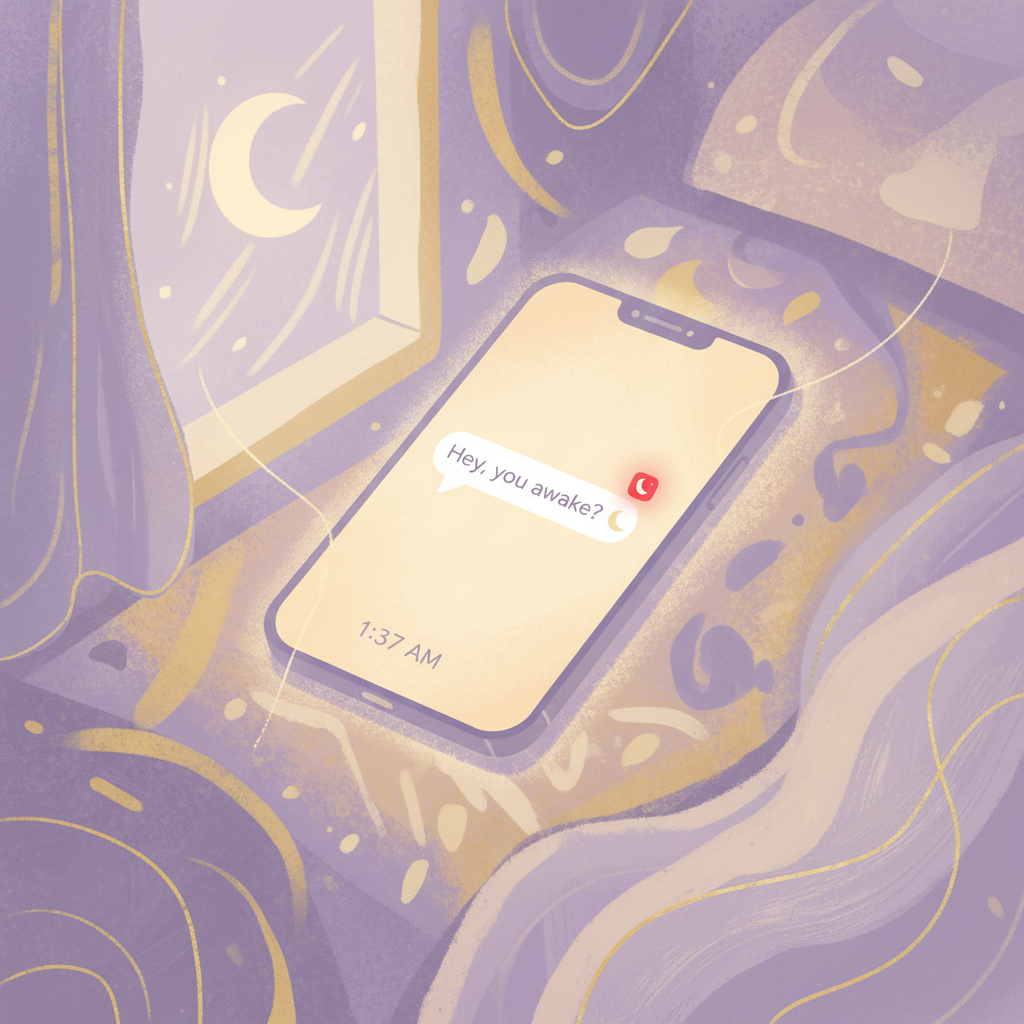
"Text me when you get home." You've said it a hundred times. Your friend has said it to you. It's the safety ritual that's supposed to protect everyone. Until the text doesn't come. And you're left staring at your phone at 11:47pm, wondering: Do I wait? Do I call? Is she just having fun, or is something wrong?
That silence — that gut-wrenching uncertainty between "she's fine" and "something's happened" — is the moment the system fails.
The Stories We Don't Talk About
We all know someone who knows someone. The friend who went on a Tinder date and her roommate didn't hear from her until the next afternoon. The colleague whose sister had to be tracked down by her dad after she missed three check-in texts. The woman who was reported missing after a night out and found days later.
These aren't stranger-in-the-bushes scenarios. Three-quarters of sexual assaults against women are committed by someone the victim knows. Friends. Acquaintances. Dates. People who seemed normal enough to agree to meet.
And here's what makes it even harder: The people who seemed the most normal are often the ones who weren't.
Why the "She'll Text Me" System Fails
- She forgets. The date's going great. She's having fun. Midnight passes and she didn't even notice.
- Her phone dies. Between taking photos, navigation, and texting you earlier, her battery is at 3% by 10pm.
- You fall asleep. You meant to stay up and check. But you were tired, and by the time you wake up, it's morning.
- You assume she's fine. No news is good news, right? She's probably just extended the night. You don't want to be that friend who interrupts.
- She can't text. Her phone's been taken. She's incapacitated. She's in a situation where reaching for her phone would make things worse.
The friend-based check-in system relies on two people both remembering, both being available, and both being in a position to act. And when one of those pieces fails, the whole thing collapses.
Going on a date or night out?
Schedule a safety check-in call in 30 seconds. €1.99, no app needed.
Book a CallSafe →The Difference Between "I'll Text You" and a Scheduled Call
Here's what changes when you schedule a safety call instead of relying on a text:
It Happens Whether You Remember or Not
You don't have to remember to text. You don't have to pull out your phone in the middle of a conversation. The call comes to you, at exactly the time you scheduled. If everything's fine, you answer, confirm, and carry on. If you need an exit, the call is your excuse.
Silence Becomes a Signal
If you don't answer a scheduled call, that's an immediate red flag. Not "maybe she's busy," not "her battery probably died." A missed call at a specific, pre-arranged time means something is wrong.
It's the difference between "I haven't heard from her and I'm starting to worry" and "She didn't answer at the time she said she would — something's wrong."
Your Friend Doesn't Have to Stay Awake
The burden isn't on your friend to monitor their phone all night. The call comes from a system that doesn't forget, doesn't get tired, and doesn't assume you're fine just because you haven't texted.
Someone waiting for a text that never comes? There's a better system.
Schedule a CallSafe — it calls you, not the other way around →Real Scenarios Where This Matters
The Date That Goes Sideways
You met him on Hinge. The conversation was great. You agreed to drinks at 7pm. You told your friend you'd text by 10pm.
But at 9:30pm, he suggests moving to a quieter bar. You're enjoying yourself, so you say yes. By 10:15pm, you realize the new place feels... off. He's ordered you another drink even though you said you were done. You want to leave, but you don't want to seem rude.
With a scheduled CallSafe: At 10:30pm, your phone rings. It's your check-in. "Sorry, I need to take this," you say. And suddenly, you have a reason to step away. A reason to leave. A reason that doesn't require confrontation or awkwardness.
The Friend Who Forgot
Your best friend is supposed to check in at 11pm. You're out with your boyfriend. She's on a first date. You set a reminder, but you got distracted and didn't see it until 11:47pm.
You text her. No response. You call. It goes to voicemail. Do you panic? Do you wait? How long before "she's probably fine" becomes "I should have called sooner"?
With a scheduled CallSafe: She gets a call at 11pm whether you remember or not. If she answers, great. If she doesn't, you know immediately — not 47 minutes later when you finally checked your phone.
The "He Seemed Normal" Date
He was a friend of a friend. You'd met him twice before at group things. He asked you out for coffee. It seemed safe — you already knew him, kind of.
But midway through the date, something shifts. He gets pushy about going back to his place. He insists on walking you to your car even though you said you're fine. Suddenly, the guy who seemed normal doesn't feel normal anymore.
With a scheduled CallSafe: You've got a call coming in 20 minutes. If things feel off, you know there's a built-in exit point. If they escalate, a missed call is an immediate signal that something's wrong.
You Shouldn't Have to Choose Between Politeness and Safety
One of the biggest reasons women don't leave uncomfortable situations is because it feels rude. You don't want to overreact. You don't want to hurt someone's feelings. You don't want to be "that girl" who made a big deal out of nothing.
A scheduled call removes that burden. You're not making a scene. You're not accusing anyone of anything. You're just answering your phone. And if the person you're with respects you, they'll understand. If they don't... well, that tells you everything you need to know.
How CallSafe Works:
Before your date: Schedule a check-in call for your chosen time (e.g., 90 minutes in, or when you plan to leave)
When the call comes: If everything's great, you answer briefly and carry on. If you want to leave, the call is your excuse
If you don't answer: That's the signal something's wrong — not hours later when your friend realizes you never texted
The Text That Never Came — And Why It Doesn't Have to Happen Again
The friend-based check-in system was the best we had before we had better options. It's built on good intentions and real care. But it's also built on hope — hope that both people remember, hope that phones stay charged, hope that nothing goes wrong in the gap between "I'll text you" and actually sending the text.
CallSafe doesn't replace your friends. It doesn't replace your instincts. It doesn't replace common sense.
What it does is remove the single point of failure in the old system: human memory.
Because the text that never came isn't always because something terrible happened. Sometimes it's because she forgot. Sometimes it's because you forgot. Sometimes it's because life got in the way and by the time anyone noticed, it was too late to matter.
But when it does matter — when the silence means something's actually wrong — every minute counts.
For €1.99, you get a safety call that happens whether you remember or not. Whether your friend's awake or not. Whether your phone's charged or not.
It's the check-in that doesn't rely on anyone being perfect. Because none of us are.
🚨 In an emergency: Call 999 or 112 immediately. If something feels wrong, trust your instincts and leave. CallSafe is a check-in tool, not emergency response.
References
- Black and Missing Foundation — Missing Persons Statistics — https://www.blackandmissinginc.com/statistics/
- Bureau of Justice Statistics — Female Victims of Sexual Violence — https://bjs.ojp.gov/content/pub/pdf/FEMVIED.PDF